
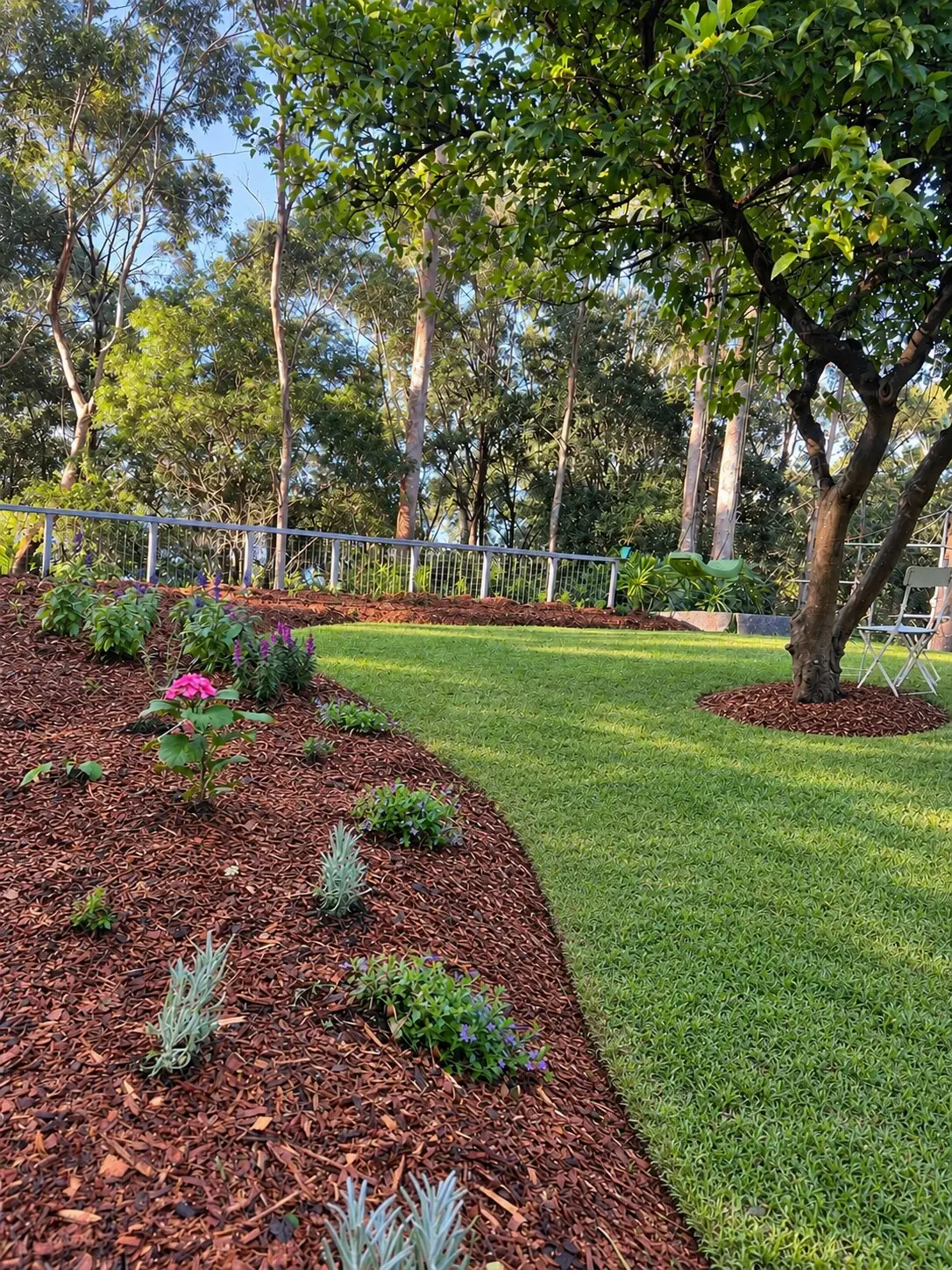
A fresh layer of mulch is one of the quickest ways to refresh a garden bed. It is also practical protection for the soil, especially as the weather becomes warmer and drier.
What mulch can do
- Reduce moisture loss from exposed soil.
- Make it harder for new weeds to establish.
- Buffer the soil from rapid temperature changes.
- Add organic matter over time when an organic mulch is used.
- Give garden beds a cleaner, more unified finish.
Preparation comes first
Fresh mulch should not simply hide an untidy bed. Remove established weeds, clear loose debris, define the edges and check the soil moisture first. Where old mulch has become compacted or built up too deeply, it may need to be loosened or removed before the new layer goes down.
Choose for the garden, not just the colour
Different products break down at different rates and create different finishes. The best choice depends on the plants, slope, exposure and whether you want long-lasting coverage or a material that contributes more quickly to the soil.
When a bed needs a full reset
If weeds have taken over, the old layer is uneven or the bed shape has disappeared, a reset may be more useful than a quick top-up. That can include removing excess old mulch, weeding, reshaping the edge and spreading the new material evenly.